How to simplify complex funnel setups for scalable success.
Creating a high-converting sales funnel can feel like assembling a jigsaw puzzle—pieces everywhere, no clear picture in sight, and the constant fear that one wrong move could ruin the whole thing. But what if I told you that simplifying your funnel setup could actually amplify your success? That’s right, less complexity can lead to more scalability. Intrigued? Let’s dive in.
Why Simplification Matters in Sales Funnels
Think about the last time you tried to follow a convoluted process—did you feel motivated to complete it, or did you abandon it halfway through? Your customers feel the same way. A complex funnel can confuse users, increase drop-off rates, and ultimately hurt your conversion metrics. Simplifying your funnel isn’t just about making your life easier; it’s about creating a seamless experience for your audience that guides them effortlessly toward a purchase.
Step 1: Define Your Core Objectives
Before you even think about designing your funnel, ask yourself: What’s the ultimate goal here? Is it to sell a product, gather leads, or nurture a community? Having a clear objective helps you strip away unnecessary steps and focus on what truly matters.
For example, let’s say you’re launching an online course. Your core objective might be to get users to sign up for a free trial. Everything in your funnel—landing pages, email sequences, calls to action—should revolve around that goal. Anything that doesn’t directly contribute to this objective? Cut it out.
Step 2: Map Out the Customer Journey
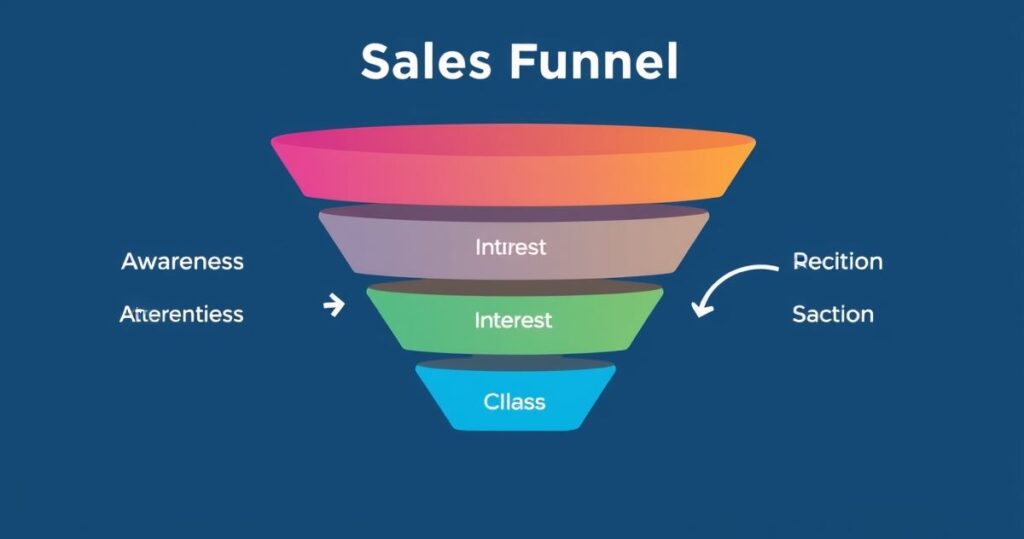
Understanding your customer’s journey is crucial for simplification. Break down the process into key stages: Awareness, Interest, Decision, and Action. Now, think about how your audience moves through these stages. Are they discovering your product through social media? Are they researching reviews before making a purchase?
A real-world example: A fitness coach might create a funnel where users first encounter a free video on YouTube (Awareness), then sign up for a webinar (Interest), followed by a discounted offer for a workout program (Decision), and finally, a purchase of the full program (Action). Each step naturally leads to the next, making the journey intuitive and frictionless.
Step 3: Automate Where Possible
Automation is your best friend when it comes to simplifying complex funnel setups. Tools like email marketing platforms, CRM systems, and analytics software can handle repetitive tasks, freeing you up to focus on strategy and creativity.
Let’s say you’re running a SaaS business. Instead of manually sending out onboarding emails, you can set up an automated sequence that triggers based on user actions. This not only saves time but also ensures consistency in communication, which is key to building trust with your audience.
Step 4: Use Data to Optimize
Here’s where things get interesting. Simplifying your funnel doesn’t mean setting it and forgetting it. You need to continually analyze data to identify bottlenecks and areas for improvement. Use tools like Google Analytics, heatmaps, and A/B testing to gather insights.
For instance, if you notice that a significant number of users are dropping off at the checkout page, it might indicate a problem with the payment process. Maybe the page is too complicated, or there are too many fields to fill out. Simplifying this step could significantly boost your conversion rates.
Step 5: Streamline Your Offerings
One common mistake businesses make is trying to offer too much at once. This not only overwhelms your customers but also complicates your funnel. Instead, focus on your most valuable offer and build your funnel around it.
Consider the case of a digital marketing agency. Instead of offering everything from SEO to social media management, they might specialize in high-converting Facebook ad campaigns. By streamlining their offerings, they can create a more focused and effective funnel that drives results.
Step 6: Test and Iterate
Finally, remember that simplification is an ongoing process. What works today might not work tomorrow. Regularly test different elements of your funnel—headlines, CTAs, design, etc.—to see what resonates best with your audience.
Let’s be honest, no funnel is perfect right out of the gate. But by continually testing and iterating, you can fine-tune your setup for maximum efficiency and scalability.
Example Comparison Matrix: Traditional vs. Simplified Funnels
| Aspect | Traditional Funnel | Simplified Funnel |
|---|---|---|
| Objective | Multiple goals, often unclear | Single, focused objective |
| Customer Journey | Complex, multiple touchpoints | Streamlined, intuitive path |
| Automation | Manual processes | Automated where possible |
| Data Usage | Limited or sporadic analysis | Continuous, data-driven optimization |
| Offerings | Wide range of products/services | Focused on core offering |
| Testing | Infrequent or none | Regular testing and iteration |
Conclusion
Simplifying complex funnel setups for scalable success doesn’t have to be daunting. By defining your core objectives, mapping out the customer journey, automating repetitive tasks, using data to optimize, streamlining your offerings, and continually testing and iterating, you can create a funnel that not only converts but also scales with your business.
So, what’s the first step you’ll take to simplify your funnel? Remember, the goal is to make the journey as smooth as possible for your customers—because when they win, you win too.