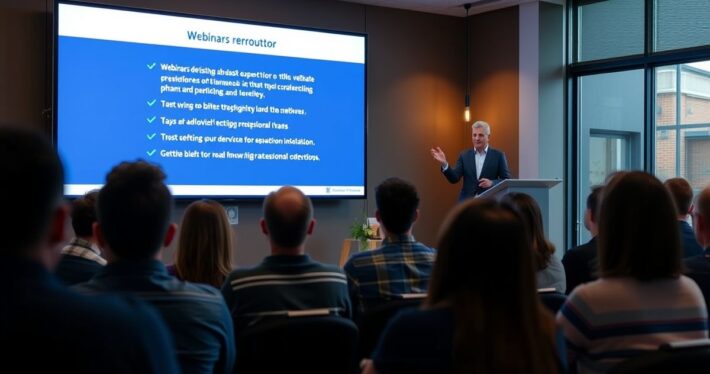
Leveraging webinars to establish yourself as an industry authority.

Blog-article-content
Webinars aren’t just a marketing tool—they’re a powerhouse for establishing authority in your industry. Think about it: when was the last time you attended a webinar and left thinking, “Wow, this person really knows their stuff?” That’s the magic of well-crafted webinars. They allow you to showcase your expertise, connect with your audience on a deeper level, and position yourself as the go-to authority in your niche. But how do you leverage webinars to their full potential? Let’s dive in.
Why Webinars Are the Ultimate Authority-Building Tool
Webinars combine education, engagement, and credibility into one dynamic format. Unlike blog posts or social media updates, webinars let you interact with your audience in real-time, answer their burning questions, and demonstrate your knowledge in a way that feels personal and authentic.
Here’s the thing: people don’t just want information—they want to learn from someone they trust. Webinars give you the platform to build that trust. By sharing actionable insights, addressing pain points, and providing value, you’ll position yourself as the expert your audience can rely on.
Step 1: Identify Your Niche and Target Audience
Before you even think about hitting the “record” button, you need to know who you’re speaking to. Why? Because authority isn’t built in a vacuum—it’s built by solving specific problems for a specific audience.
Take this example: Imagine you’re a digital marketing expert. Instead of hosting a webinar on general marketing tips, you could focus on something more niche, like “How to Use AI Tools to Double Your Email Open Rates.” This not only sets you apart but also attracts a highly targeted audience who’s eager to learn from you.
Ask yourself:
- What problems does my audience face?
- What questions are they asking in online communities or forums?
- How can I provide unique insights they won’t find elsewhere?
Step 2: Craft a Powerful Webinar Structure
Now, here’s where it gets interesting. A webinar isn’t just a presentation—it’s a performance. To keep your audience engaged and establish your authority, you need a clear, compelling structure.
Start with a strong hook: Share a surprising statistic, a relatable story, or a bold statement that grabs attention. Then, dive into the content, breaking it into digestible sections with clear takeaways. End with a call-to-action (CTA) that leaves your audience inspired and ready to take the next step.
Pro Tip: Use tools like Slide Outline Creator to balance education and engagement. This ensures your webinar flows seamlessly and keeps your audience hooked from start to finish.
Step 3: Deliver Valuable, Actionable Content
Let’s be honest: no one attends a webinar to hear fluff. Your audience is there for value, and delivering it is non-negotiable.
Here’s how to do it:
- Share insider knowledge or industry secrets you’ve learned through experience.
- Provide actionable steps your audience can implement immediately.
- Use case studies or real-world examples to illustrate your points.
For instance, if you’re a fitness coach, you could share a case study of how you helped a client lose 20 pounds in 3 months using a specific workout plan, and then show exactly how they can do it too.
Step 4: Showcase Your Expertise Without Bragging
One of the biggest mistakes people make when trying to establish authority is overloading their audience with their credentials. Listen, your audience doesn’t care about your degrees or certifications—they care about how you can help them.
Instead of saying, “I’ve been in this industry for 20 years,” show your expertise through the quality of your content. For example, if you’re a financial advisor, you could explain complex concepts like compound interest in simple terms or share how you helped a client save $10,000 in a year.
Step 5: Engage Your Audience and Build Relationships
Authority isn’t just about what you know—it’s about how you connect with your audience. Webinars give you the unique opportunity to interact with your audience in real-time, whether through Q&A sessions, polls, or live chats.
Engagement builds trust, and trust builds authority. So don’t just lecture—converse. Ask questions, encourage participation, and make your audience feel like they’re part of the conversation.
Step 6: Use High-Value Bonuses to Seal the Deal
Want to take your authority to the next level? Offer bonuses that multiply the value of your webinar. Tools like the High-Value Bonus Brainstormer can help you create irresistible bonuses that make your audience say, “Wow, I can’t believe I’m getting all this!”
For example, if you’re hosting a webinar on content marketing, you could offer a bonus template for creating viral blog post headlines or a checklist for optimizing SEO. These bonuses not only enhance your authority but also increase conversions.
Step 7: Stand Behind Your Expertise with Guarantees
Nothing says “authority” like standing behind your work. Use tools like the Risk-Reversal/Guarantee Generator to create guarantees that make saying “yes” to your offer safer than saying “no.”
For instance, if you’re selling a course on mastering public speaking, you could offer a 30-day money-back guarantee or a promise to coach participants personally if they don’t see results. This shows confidence in your expertise and reinforces your authority.
Real-World Example: How a Startup Founder Became an Industry Leader
Let me share a quick story. A friend of mine, Sarah, launched a startup in the sustainable fashion industry. She was struggling to stand out in a crowded market, so she decided to host a webinar on “How to Build a Zero-Waste Wardrobe on a Budget.”
Sarah didn’t just talk about the problem—she showed her audience exactly how to solve it, providing step-by-step instructions, downloadable resources, and personalized tips. She also offered a bonus guide on sustainable fabric care. Within a year, Sarah went from being an unknown startup founder to a recognized expert in her field, with speaking invitations and media features to prove it.
Common Mistakes to Avoid
- Overpromising and Underdelivering: Don’t promise the moon if you can’t deliver. Be realistic about what your audience can achieve with your guidance.
- Ignoring Audience Feedback: Pay attention to what your audience is saying during and after the webinar. Use their feedback to improve and refine your content.
- Being Too Salesy: Your primary goal is to educate and build trust, not to make a sale. Focus on providing value, and the sales will follow.
Final Thoughts
Leveraging webinars to establish authority isn’t just about sharing knowledge—it’s about building trust, solving problems, and creating meaningful connections with your audience. By following these steps, you’ll not only position yourself as an industry expert but also create a loyal following that looks to you for guidance.
So, what are you waiting for? It’s time to step into the spotlight and show your audience why you’re the authority they’ve been searching for.